Maslow's Pyramid - Steps for Personal Development
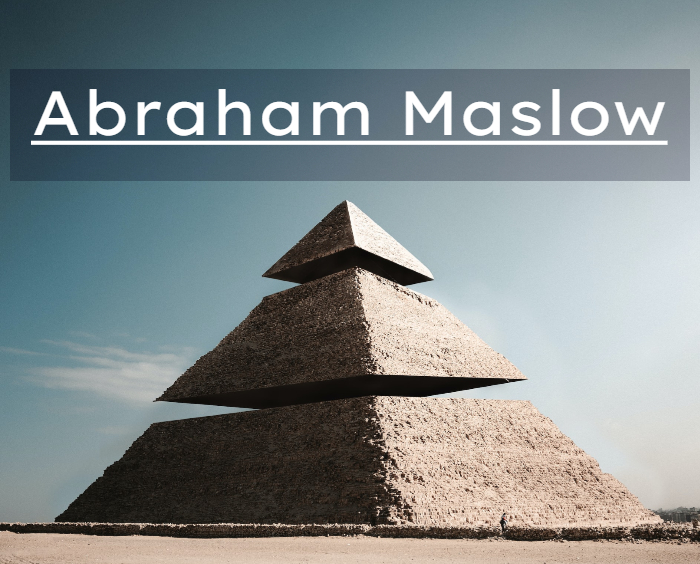
Maslow's pyramid is a collection of human needs in a hierarchical order, starting from food to constant self-development. It reflects one of the most common motivational concepts - the theory of the hierarchy of needs, developed by the American psychologist Abraham Maslow.
Maslow believed that if a person cannot satisfy the previous level of needs, then he cannot move on to the next. For example, if a person needs food, then he is unlikely to think about self-development.
Just do not confuse this concept with a situation where you are very hungry, but you continue to work or do something else. In fact, you have food and can satisfy your hunger at any time. It is another matter when there is no food, no money and something to think about to fix it.
An important fact: Maslow himself did not participate in the creation of the pyramid in any way. In his first works, “Theory of Human Motivation” (1943) and “Motivation and Personality” (1954), he identified five levels of human needs. Later, his theory was broken down into theses, and a pyramid was created on their basis.
Naturally, one picture cannot convey the essence of all the works of the psychologist, and therefore, more and more often, Maslow’s theory is criticized for its inconsistency with reality: not all people strive for the last, highest level, and some can move to another level without satisfying the needs of the previous one (such as, for example, geniuses who are focused only on their work).
And yet, this fact did not prevent psychologists, marketers, and managers from establishing and implementing this theory in life and business.

So, what does Maslow's pyramid consist of?
Maslow's pyramid consists of 5 main levels:
- Physiological needs;
- Safety needs;
- Social needs;
- Esteem and recognition needs;
- Self-actualization needs.
However, there is a more extensive version of the pyramid, which has 6 and 7 levels.
The sixth level is related to aesthetics. A person needs beauty, symmetry, order in the visual aspect.
The last level of Maslow's hierarchical pyramid is the level of self-actualization, which implies the manifestation and realization of the maximum of human capabilities.
Maslow believed that if a need is satisfied, it is no longer a motivator and attention moves to the next level of the hierarchy. However, he also recognized that the sequence is not indispensable, especially at the higher levels. For example, some people put self-esteem above the need for love, while others do not strive for self-actualization at all.
In the 1970s, Maslow added another level – human transcendental (beyond the scope of experience, inaccessible to cognition) needs, that is, the need to obtain knowledge through the senses. At this level, the psychologist combined: human faith, experience of unity with nature, sexual experiments, etc.
According to Maslow, each person needs to feel like an independent and competent individual. In addition, he believes that any person has a limit to growth and development. In a word, according to the famous psychologist, for self-determination it is necessary to know one’s feelings, live a full life and maximum concentration on one’s inner voice.
However, over time, Maslow revised his theory. In subsequent works, he changed the motivational concept and abandoned the multi-level system. But this fact does not prevent marketers around the world from using the pyramid again in their work.

Maslow's "Revised" Pyramid
In the revised version, Maslow divided human needs into two types:
- Deficient
Everything that people do to escape the lack of food, sleep, and friends - that is, almost the entire pyramid - was combined by Maslow into one type.
- Higher
Everything that cannot be fully satisfied: the desire to develop, to become a person, and to fully realize oneself.
According to Maslow's pyramid, it is impossible to fully satisfy all human needs, since the concept itself implies the constant growth and development of a person in order to progress.
The steps necessary for personal development include:
- Developing a personal vision – that is, setting a specific goal of where you want to be in the future and why – is a vital part of personal development.
- Personal development planning – Once you have decided where you want to be, you can start thinking about how you will get there. The plan can include goals and sub-goals, the steps you need to take to achieve your main goal. It is good if you also consider the tasks you have set in a time frame.
- Progress tracking – Tracking progress is a great way to stay motivated. It gives you the incentive to keep moving forward towards bigger goals.
Many people have ideas, but only Lemons.ge has solutions!
Lemons.ge team is always by your side when you need creative vision and real results.
Address: 117a Tsereteli Ave.
Contact: ( 995) 032 2 45 01 01
Other News