Web site design principles
Website design is the art of combining beautiful design with ease of use.
An effectively designed website builds trust and encourages users to browse the site.
Follow us to learn how to design a website using important principles to achieve effective results, why they are important and relevant, and how to get them right for your next project.
1. Website setup
It is important to structure your website in a logical way that is understandable and predictable. A consistent layout of menus and internal links will help visitors easily navigate your site.
2. პასუხისმგებელი დიზაინი
A successful website is one that works equally well on a desktop, laptop, and mobile device. Designers do this by resizing images and content to fit different screen sizes and browsers.
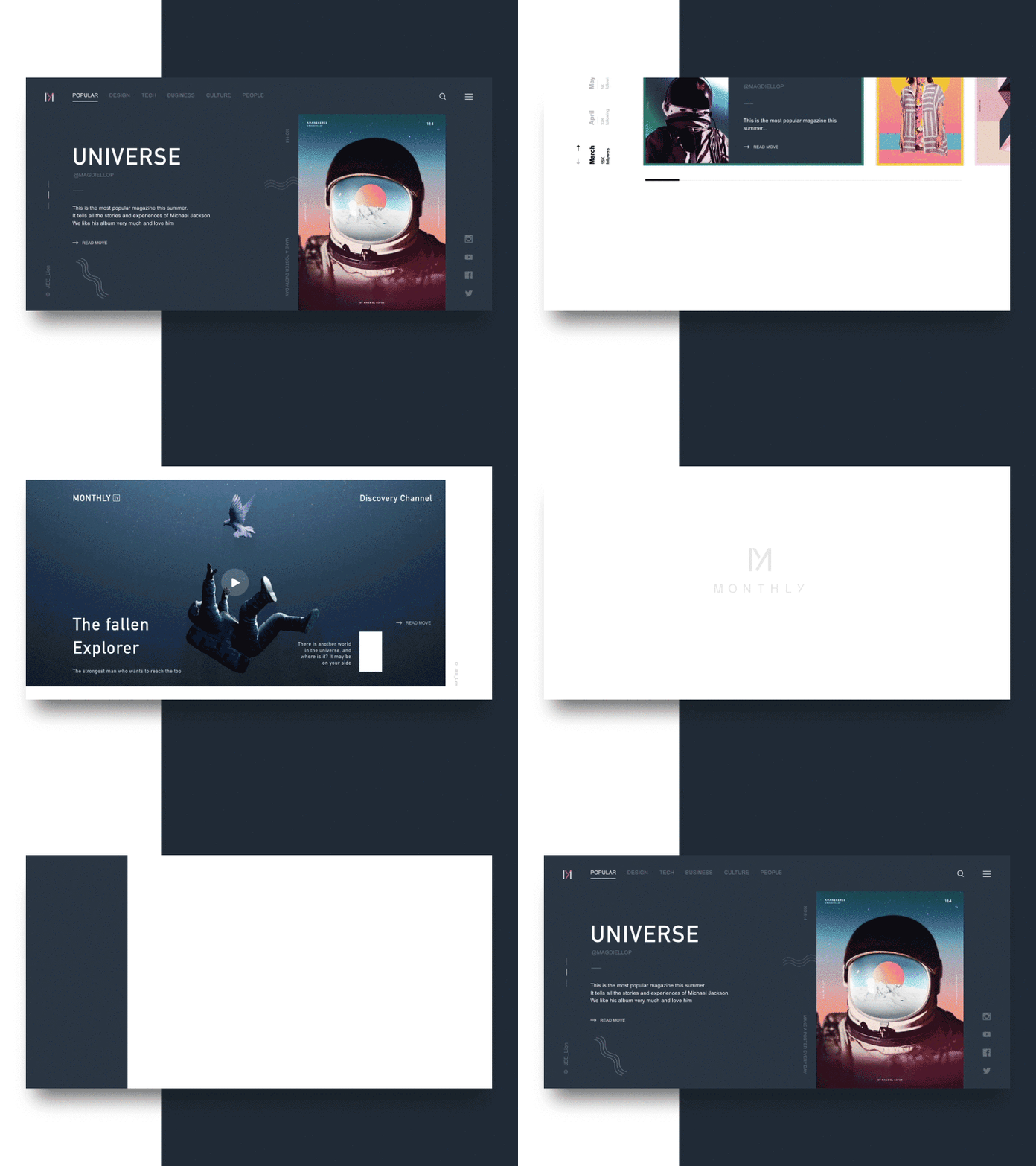
3. Consistent Design
Unified functionality across the entire website makes the overall look and feel consistent, while also improving usability and learnability. This includes everything from the use of colors and typography to the placement of icons and buttons.
4. Site Speed
A website should work properly and have informative feedback. There should be no lag or delays when moving from one page to another. Google has Pagespeed insights that you can use to measure the speed of your site.
5. Simplified Process
For visitors who want to register, subscribe, or make a purchase - the process should be as simple as possible. This includes removing any unnecessary steps and only asking for relevant information.

6. Clear communication
You interact with visitors in a variety of ways - with content, visual elements, and interactive components, all of which work together to convey a clear and consistent message. People should be able to easily understand why your website exists, what you offer, and why you're here.
7. Effective visual language
In effective website design, every color, icon, typography, image, and other visual element represents a powerful visual language that tells a story. When combined with well-written content, effective visual language can help create a cohesive, memorable, and enjoyable experience on your site and beyond.
8. Hierarchical content structure
The information on your site should be well-organized and easy to digest. Visual hierarchy allows you to create content in a meaningful and logical way, so that the most important information receives the most emphasis and the least important information receives less emphasis.
Hierarchy can be achieved through a variety of visual techniques, including color, contrast, size, and white space. A hierarchical content structure helps visitors better digest information and guides them to find the information they are looking for in a clear and user-friendly way.
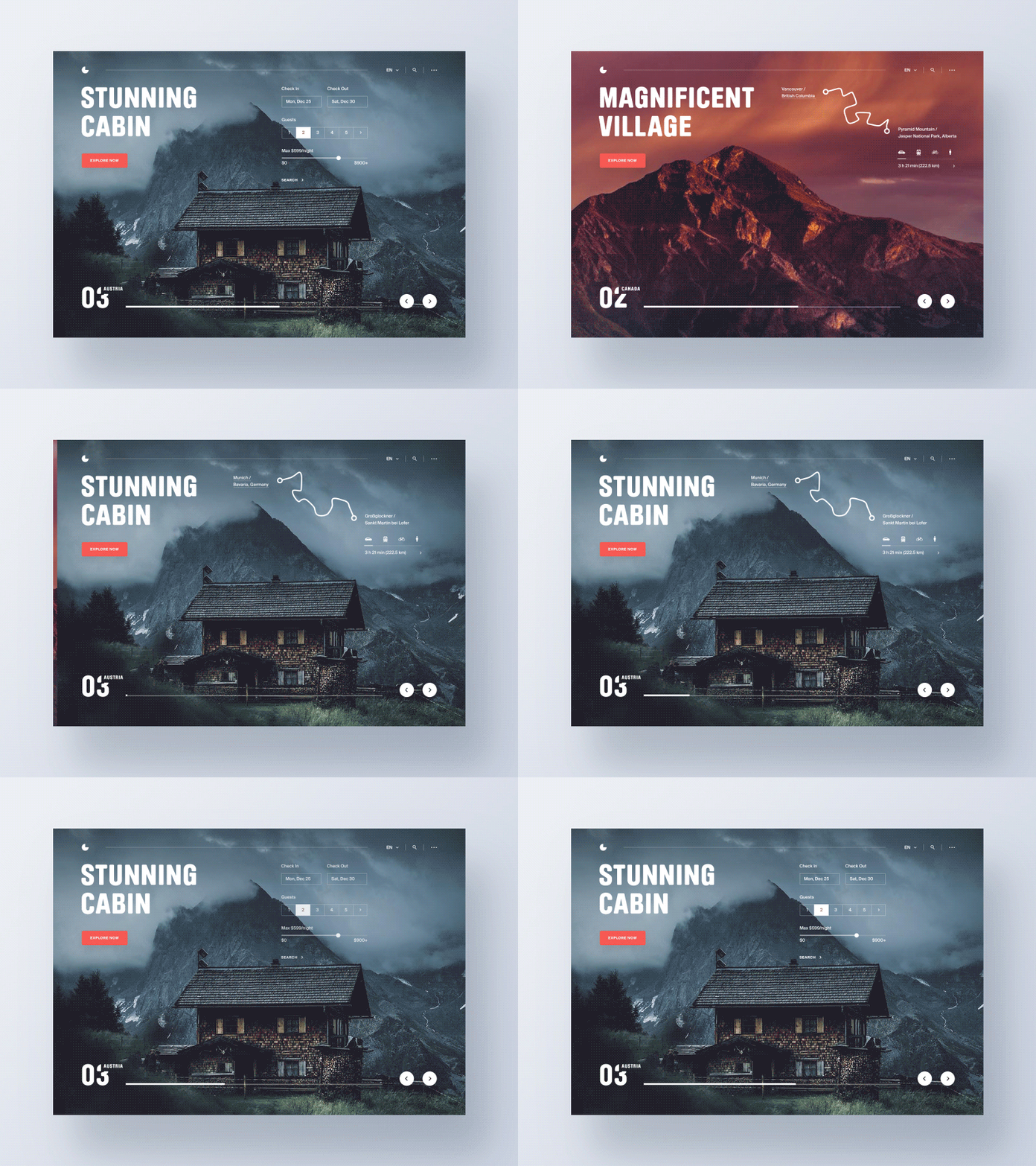
9. Familiar web conventions
A good website design is often familiar, even when we encounter it for the first time. In this case, navigation from page to page is intuitive, information is easy to find and understand, and everything works as you expect.
This is because the best website designs often follow familiar web conventions, or industry standards that reflect clarity and usability in web design. Web conventions are mental models that visitors have developed from visiting many other sites and rely on them to create a user-friendly interface. As Jacob’s Law explains, visitors spend most of their time on other sites. This means that they prefer new sites to work in a way that they already know.
Designing your site according to familiar web conventions—including conventions for interaction design, visual design, and information architecture—allows visitors to find information quickly and confidently, rather than having to learn a new system each time. One example of a web convention is placing a global navigation bar at the top of the screen, with clearly labeled categories that represent the content of your site. Moving the navigation bar to the bottom of the page or using labels that people might not be familiar with may be innovative, but it is far from what users know and expect and can lead to usability issues.
10. Reliable, transparent interface
Website design should build trust with its visitors. To create a trustworthy online environment, the information on your site should be clear, consistent, and accurate. It should also be free of errors and confusion, and pay attention to detail.
A trustworthy site also communicates with visitors in a transparent manner, with up-front disclosures about fees and pricing, reasons for collecting personal data, and honest reviews and testimonials from users, while avoiding dark UX patterns. All of these elements work together to instill a sense of trust, which leads to a positive experience on the site.
Many people have ideas, but only Lemons.ge has solutions!
Lemons.ge team is always by your side when you need creative vision and real results.
Address: 117a Tsereteli Ave.
Contact: ( 995) 032 2 45 01 01

Other News